
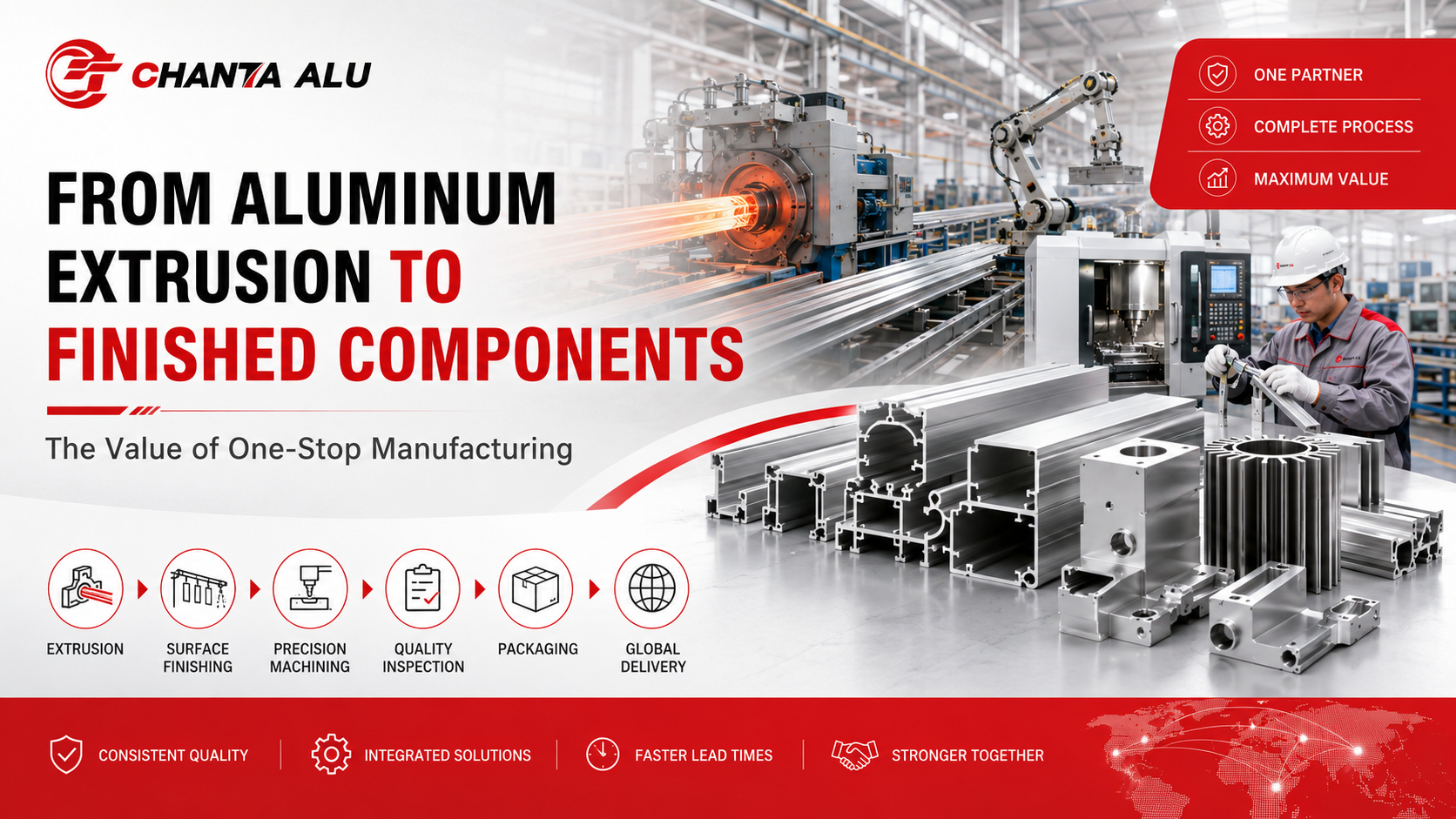
How to Choose a Reliable Custom Aluminum Extrusion Manufacturer
Selecting a custom aluminum extrusion manufacturer is an important decision for any industrial project.
The supplier can directly influence product quality, development time, production cost, delivery performance, and long-term supply stability.
Although price is important, professional B2B buyers should evaluate the complete capability of the manufacturer.
A reliable supplier should be able to support the project from design review and die development to extrusion, finishing, machining, inspection, and delivery.
Evaluate Engineering Support
Custom aluminum extrusion begins with product design.
Before developing a die, the manufacturer should review whether the profile can be produced efficiently and consistently.
Important design factors include:
- Wall thickness
- Profile size
- Internal ribs
- Hollow structures
- Dimensional tolerances
- Surface requirements
- Machining allowances
- Assembly functions
- Alloy selection
A professional engineering team can identify potential manufacturing risks before production begins.
This can reduce tooling modifications, sampling delays, and unnecessary material use.
Review Extrusion Capability
Different aluminum profiles require different production equipment and process control.
Buyers should confirm whether the manufacturer can produce the required:
- Profile dimensions
- Profile weight
- Alloy grade
- Product length
- Wall thickness
- Dimensional tolerances
- Surface quality
- Order volume
Production capability should match both the technical requirements and expected purchasing quantities.
A supplier suitable for a small prototype may not always be suitable for stable mass production.
Check Quality Control Procedures
Stable quality is essential for repeat orders.
Buyers should ask how the manufacturer controls quality during each production stage.
Important inspection areas may include:
- Raw material verification
- Die inspection
- Extrusion temperature control
- Dimensional measurement
- Straightness
- Flatness
- Mechanical properties
- Surface defects
- Machining accuracy
- Coating thickness
- Color consistency
- Final packaging
Clear inspection standards help reduce disputes and ensure that products meet the customer’s drawings and specifications.
Confirm Surface Finishing Options
Surface finishing can affect appearance, corrosion resistance, wear resistance, and product life.
A capable supplier should offer suitable finishing options based on the application.
These may include:
- Anodizing
- Powder coating
- Electrophoresis
- Brushing
- Polishing
- Sandblasting
- Decorative treatments
Customers should confirm color standards, gloss levels, coating thickness, acceptable appearance criteria, and sample-approval procedures before mass production.
Evaluate Precision Machining Capability
Many customers need finished aluminum components rather than basic extrusion lengths.
Secondary processing may include:
- Precision cutting
- CNC milling
- Drilling
- Tapping
- Punching
- Bending
- Deburring
- Assembly
- Custom packaging
When extrusion and machining are coordinated by one supplier, customers can improve dimensional consistency and reduce transportation between factories.
This also makes quality responsibility clearer.
Review Packaging and Export Experience
Aluminum surfaces can be scratched, dented, or deformed during transportation.
Export packaging should be designed according to:
- Product length
- Surface finish
- Profile shape
- Product weight
- Transportation method
- Customer unloading conditions
- Storage requirements
A supplier with international delivery experience can recommend suitable protective film, foam, paper, cartons, wooden cases, pallets, or bundled packaging.
Good packaging helps reduce transportation damage and customer complaints.
Consider Communication and Response Speed
Clear communication is essential for custom manufacturing.
A reliable supplier should respond professionally to questions involving:
- Drawings
- Specifications
- Quotations
- Tooling
- Samples
- Production status
- Inspection
- Packaging
- Shipping documents
- After-sales support
Fast communication alone is not enough. Information must also be accurate and consistent.
Evaluate Long-Term Supply Capability
For repeat and volume orders, buyers should consider whether the supplier can provide stable long-term support.
This includes:
- Production capacity
- Raw material planning
- Repeat-order consistency
- Tooling maintenance
- Quality records
- Delivery reliability
- Continuous improvement
- Project confidentiality
A long-term manufacturing partner should be able to support both current orders and future business growth.
Why Work With CHANTA ALU?
CHANTA ALU provides one-stop aluminum profile solutions for global B2B customers.
Our services include:
- Die design and development
- Custom aluminum extrusion
- Heat treatment
- Surface finishing
- Precision cutting
- Drilling and tapping
- Punching and bending
- CNC machining
- Quality inspection
- Custom packaging
- Global delivery support
We support customers from project evaluation and sampling to mass production and repeat supply.
Our focus is on stable quality, practical engineering support, efficient manufacturing, and reliable delivery.
Request a Custom Aluminum Extrusion Quotation
To receive an accurate project evaluation, customers can provide:
- Technical drawings
- Product samples
- Aluminum alloy
- Profile dimensions
- Required tolerances
- Surface finish
- Machining requirements
- Order quantity
- Packaging requirements
- Delivery destination
The CHANTA ALU team will review the information and provide a suitable manufacturing solution.
Contact CHANTA ALU to start your next custom aluminum extrusion project.